
Quick facts
- Best for
- Autonomous humanoids
- Pricing
- Freemium
- Editor rating
- 4.5 / 5
- Community saves
- 0
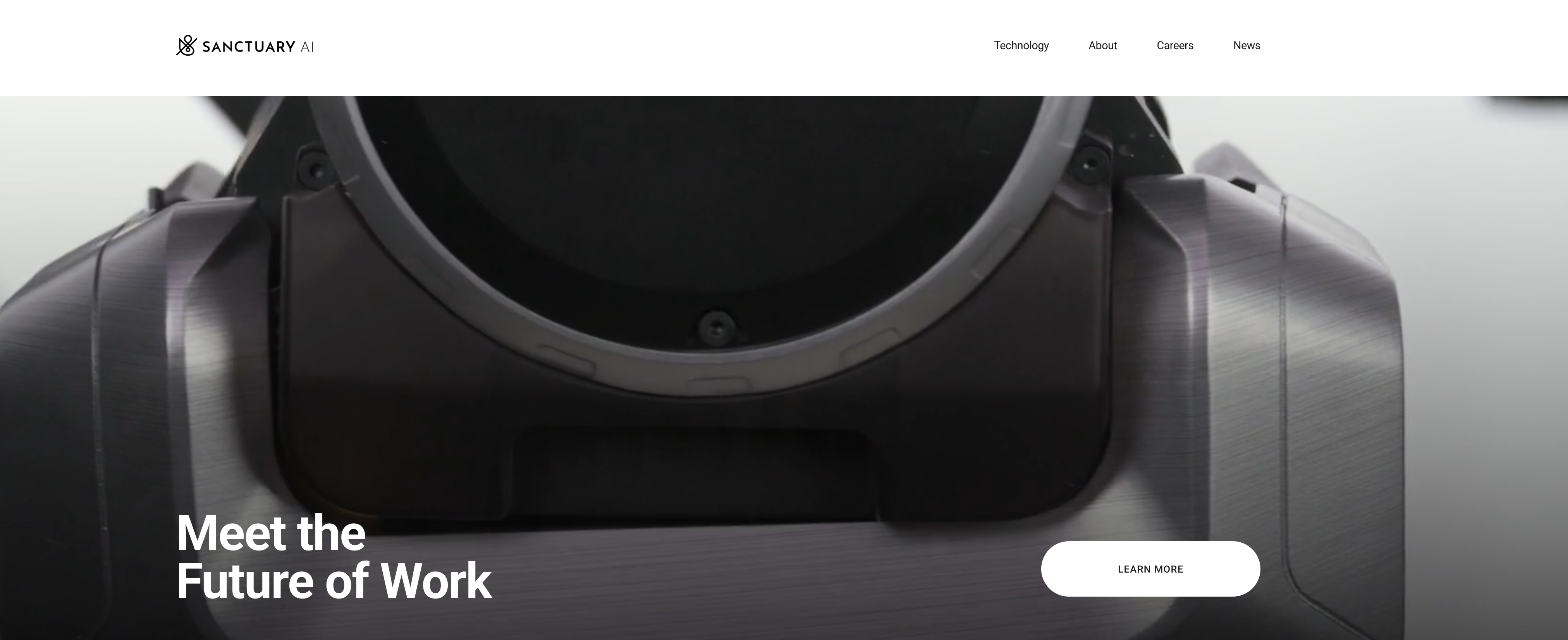
About Sanctuary AI
Sanctuary AI is an advanced technology company with a clear mission: to create and deploy industrial-grade humanoid robots. Developed in response to the challenges posed by an aging and shrinking population, Sanctuary AIs robots are aimed at addressing labour shortages, particularly in fields with work that is dull, dirty, or dangerous. Beyond simple task-specific robots, Sanctuary AI focuses on developing AI humanoid robots capable of comprehensive understanding and interaction with the world, akin to human cognitive processes. These robots, referred to as Phoenix, are primarily designed to play a crucial role in industries such as automotive, manufacturing, and logistics. They showcase a strong torso suitable for industrial-grade tasks, abilities in fine manipulation, and tactile feedback features, evidently designed for speed and precision. Emphasizing dexterity, the embodied AI systems of Sanctuary AI's robots reproduce human movement and cognition, enabling the AI to interact with and learn from the environment in ways that humans do. Sanctuary AI's achievements include innovative AI techniques for controlling advanced hydraulic hands and leading industry efforts in sim-to-real transfer of learned dexterous manipulation policies for these high-performance hands.
Pros
- Industrial-grade humanoid robots
- Addressing labor shortages
- Comprehensive understanding and interaction
- Reproduces human cognitive processes
- Strong torso for tasks
- Fine manipulation abilities
- Tactile feedback features
- Task speed and precision
- Emphasizes dexterity
- Controls advanced hydraulic hands
- Sim-to-real transfer policies
- High-performance dexterous hands
Cons
- Lacks wider adaptability
- No consumer application
- Requires advanced maintenance
- Limited regulatory guidelines
- Dependent on industry trends
- Potential ethical concerns
- Potential safety risks
- High development costs
- Lacks established user base