
Quick facts
- Best for
- Autonomous humanoids
- Pricing
- Freemium
- Editor rating
- 4.5 / 5
- Community saves
- 0
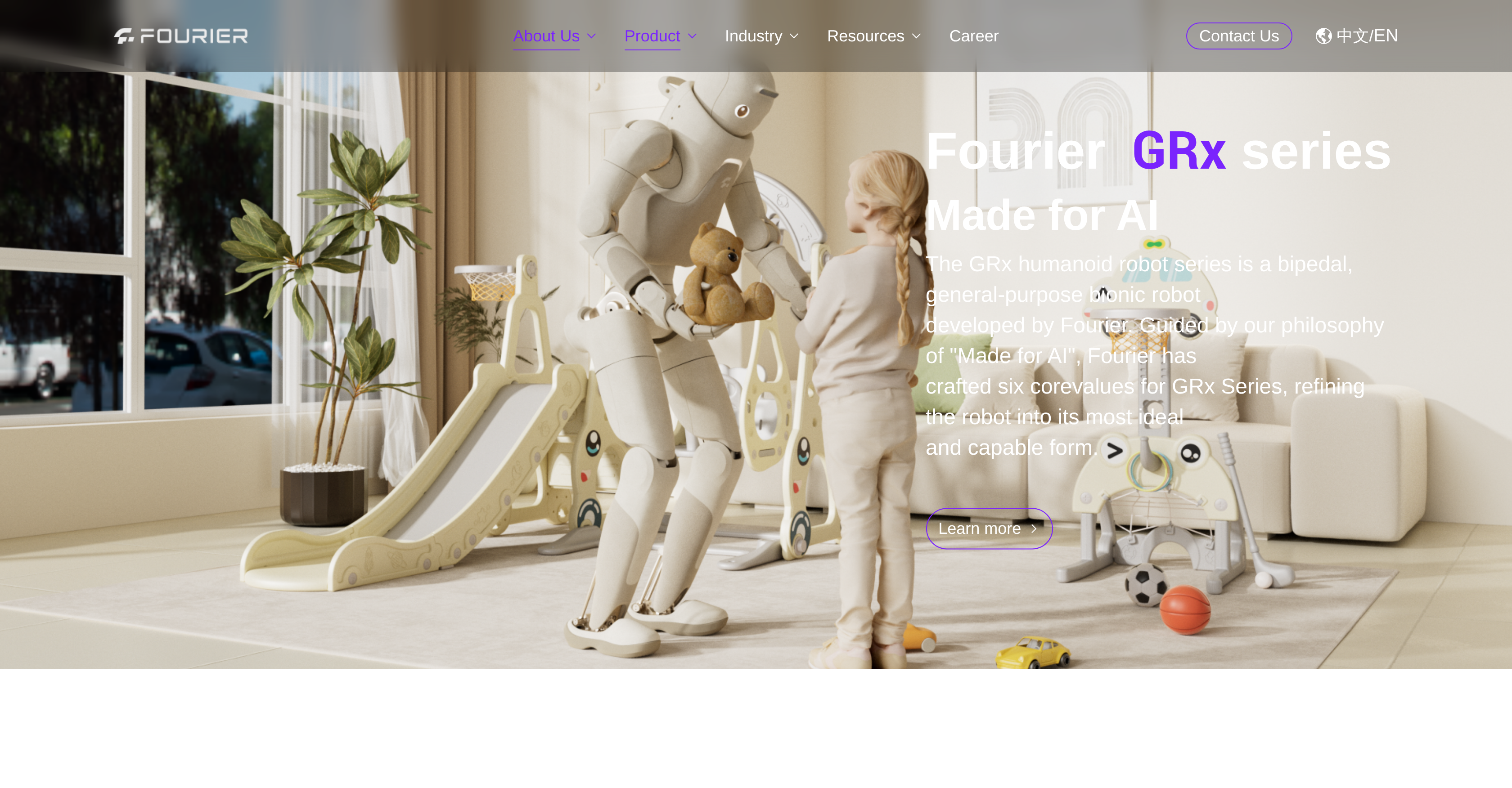
About GRx | FFTAI
The GRx Humanoid Robot Series by Fourier is a versatile and advanced range of general-purpose bionic robots. Designed to duplicate human-like degrees of freedom, this bipedal lineup is framed around the 'Made for AI' philosophy, which aims to empower AI users and developers with state-of-the-art, comprehensive robotics technology.The series includes three models: GR-1, GR-2, and GR-3. The GR-1 is noted for its flexible body structure, making significant strides in the field of practical humanoid robotic applications. The GR-2 continues on this path, with substantial advancement in aspects like hardware design, development framework, and commercialization to cater to the needs of developers across various fields and application scenarios.The GR-3 model introduces a new class of AI robots, designed to foster not just functionality but also an emotional connection for human-centric scenarios. This element marks a significant evolution in the application of AI robots beyond operational automation to emotional interaction.Fourier seeks to work collaboratively with various organizations and companies to explore the potentials of humanoid robotics. Their goal is to enhance operational productivity and intelligence, emphasizing the significance of embodied AI in various fields. This manifests the company's commitment to leveraging full-stack robotics technology to enrich lives.
Pros
- Advanced humanoid design
- Emphasizes human-like movements
- Three model range
- Flexible body structure
- Practical robotic applications
- Advancements in hardware design
- Utilizes development framework
- Wide commercialization potential
- Human-centric design
- Emotional interaction capabilities
- Operational productivity enhancement
- State-of-the-art technology
Cons
- Model specialization might limit versatility
- Emotional interaction still unproven
- No clear mention of adaptability
- Limited information on error handling
- No specific technical specifications provided
- Unclear software integration
- Unclear maintenance and repair process
- Multiple models could complicate use
- Lack of third-party compatibility info