
Quick facts
- Best for
- Search intent monetization
- Pricing
- Freemium
- Editor rating
- 4.5 / 5
- Community saves
- 0
About Zyntent
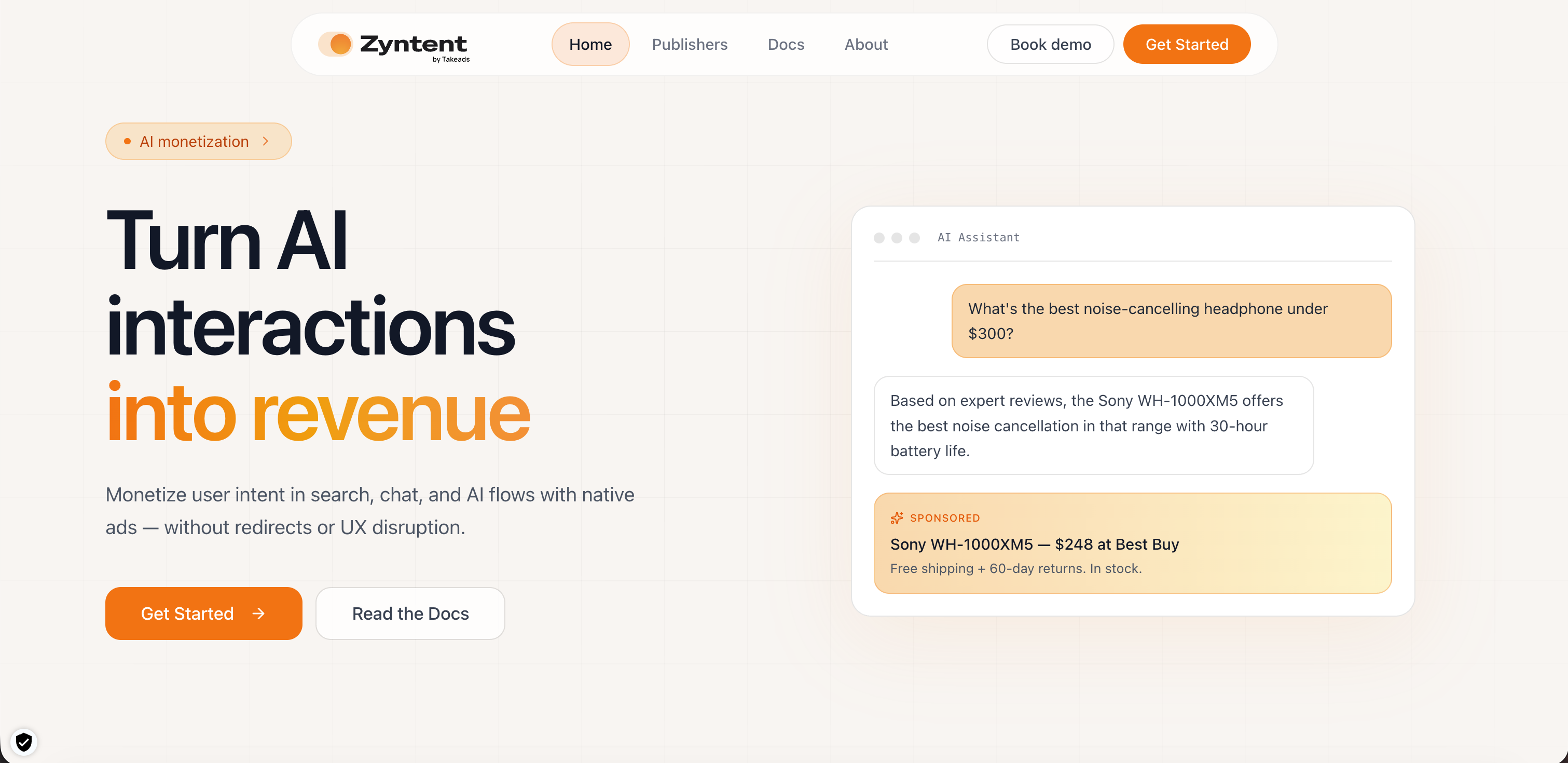
Socials: Zyntent is an AI-powered intent monetization platform designed to convert AI interactions into revenue opportunities. By detecting user intent across various sources, Zyntent is able to match this intent with real-time ad generation, without causing UX disruption or requiring redirects. This functionality applies to various traffic sources including search, content, AI apps, forums, and domains. Using a revenue share model and a single SDK format, Zyntent can be swiftly integrated into various types of language learning model stacks or custom models by developers, without the need for maintaining an infrastructure. The main feature of Zyntent involves spotting purchase indicators before they are fully formed by the user, thereby allowing quicker response and interaction times for businesses. It is capable of detecting both explicit and latent purchase intentions and matches them to the most relevant offer in an advertiser network in real-time. The targeted ads are then displayed in a contextual and non-intrusive way within the AI conversation flow. Additionally, Zyntent's ad format can adapt contextually to different AI surfaces including chat and search-driven interfaces, forums, community and domain parks, providing a seamless addition to the user's conversational flow. Supported featuresAPI
Pros
- Operates on major LLM stacks
- Smooth, non-disruptive UXDetects user intent real-time
- Matches intent with relevant ads
- Maximizes user engagement
- Includes native ad format
- No redirects needed
- Can monetize various traffic sources
- Seamless SDK integration
- Catches purchase signals early
- Real-time ad generation
- Highly efficient performance
- Contextual ad display
Cons
- Limited control over ad matching
- Zero-shot inference limitations
- No user data storage
- Dependent on advertiser network
- Latency relies on advertiser responses
- No support for IAB taxonomy
- Legacy DSP integration issues
- CTR rates may vary greatly
- Single SDK format limitations
- Custom model integration complexities