
Consensus
AI-powered academic search: find and understand science faster.
Quick facts
- Best for
- Scientific article summaries
- Pricing
- Freemium
- Editor rating
- 4.5 / 5
- Community saves
- 0
About Consensus
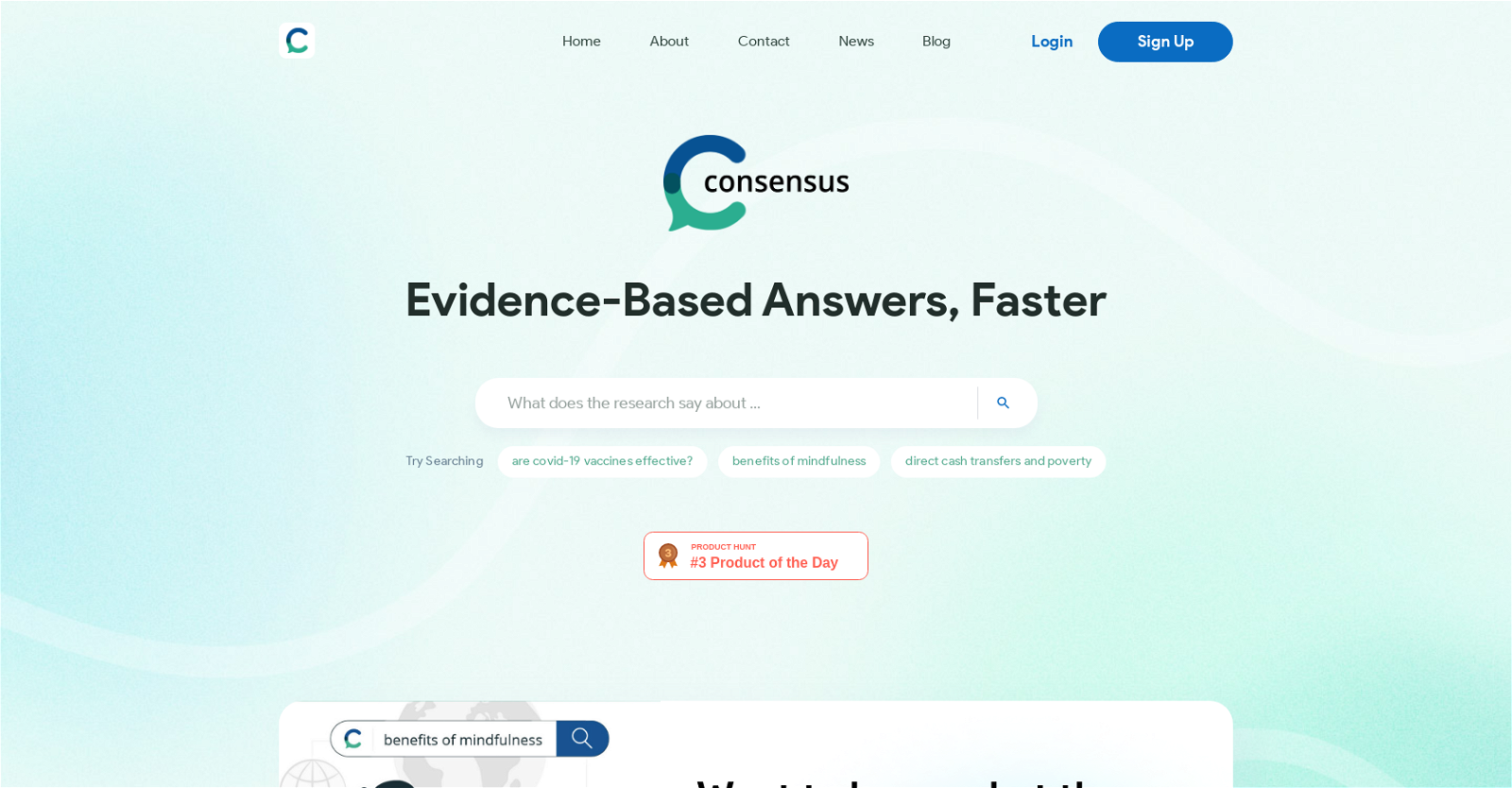
Consensus is an AI-powered academic search engine designed to streamline academic and scientific research. This engine utilizes AI and semantic search technologies to provide instant insights and synthesis on a wide range of topics. Designed to enhance research efficiency, Consensus allows for the exploration of over 200 million academic papers across sundry scientific domains. It is not just a search engine, but also an insightful tool that provides quick understanding of complex topics through features like Consensus Copilot and Consensus Meter. The platform ensures results delivered are the most relevant to users' queries, aided by proprietary academic tools and filters. Consensus is designed for a wide range of users, from individual researchers and curious individuals to students, clinicians, academics, and professionals across various fields. The science organizations can use Consensus for quick information verification, understanding mechanisms of action, and staying informed about new research findings. Credibility is further ensured with the platform's rigorous sourcing policy, with all information cited and links to the original research papers provided. Beyond its search capabilities, Consensus offers comprehensive features including insights extraction from papers, research filtering, quality indicators and study snapshots for accelerated understanding. Supported featuresCitationsDeep researchSearch
Pros
- Searches 200M+ academic papers
- Extracts key paper insights
- Tool for scientific organizations
- Rigorous sourcing policy
- Supports complex topic understanding
- User-specific academic tools
- Credibility through Consensus Meter
- Enhanced research efficiency
- Cites all sources
- Research-and-user-based result filtration
- Free initial usage
- User-friendly interface
Cons
- Limited to academic content
- May miss out non-academic insights
- Possibly overwhelming amount of information
- Bias towards published studies
- Requires understanding of academic language
- No mention of translation capabilities
- Doesn't highlight ongoing research
- Limited customization options
- Dependent on consistent internet access
- May be complex for non-academics